Ideally, you never get close enough to an American alligator to be teased by any temptation to pet it. On a blistering but beautiful spring day canoeing along the Wacissa River, that opportunity was presented and vehemently rejected by my front-end rowing partner. The jury is still somewhat out as to whether or not she peed in the canoe a little, but I do distinctly remember lifting my feet in an attempt to keep them dry…
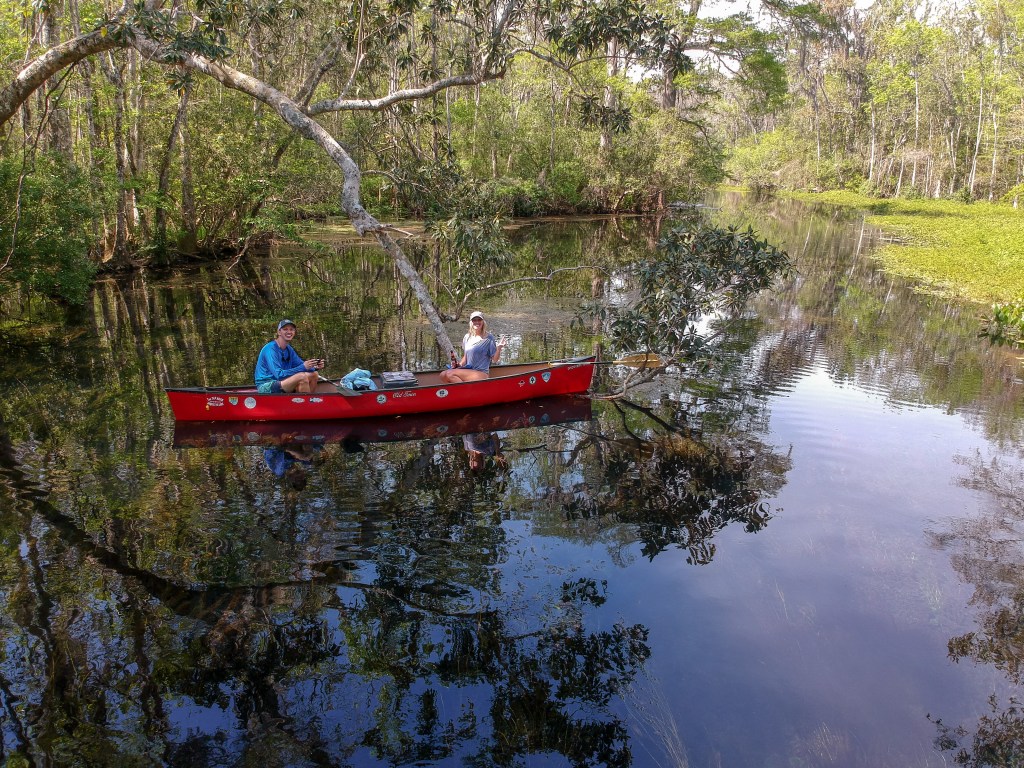
While paddling down a narrow offshoot of the main river, in search of a “Big Blue Hole” spring described to us by locals, we came across a baby alligator resting on a fallen tree branch. Very cute, and a photograph taking opportunity. Upon drifting a few feet further up, my rowing partner came abreast to the little gator on her right-hand side. Turning to her left, a nature-ful viewing opportunity – previously obscured by a leafy branch – presented itself just a few feet away from the canoe.
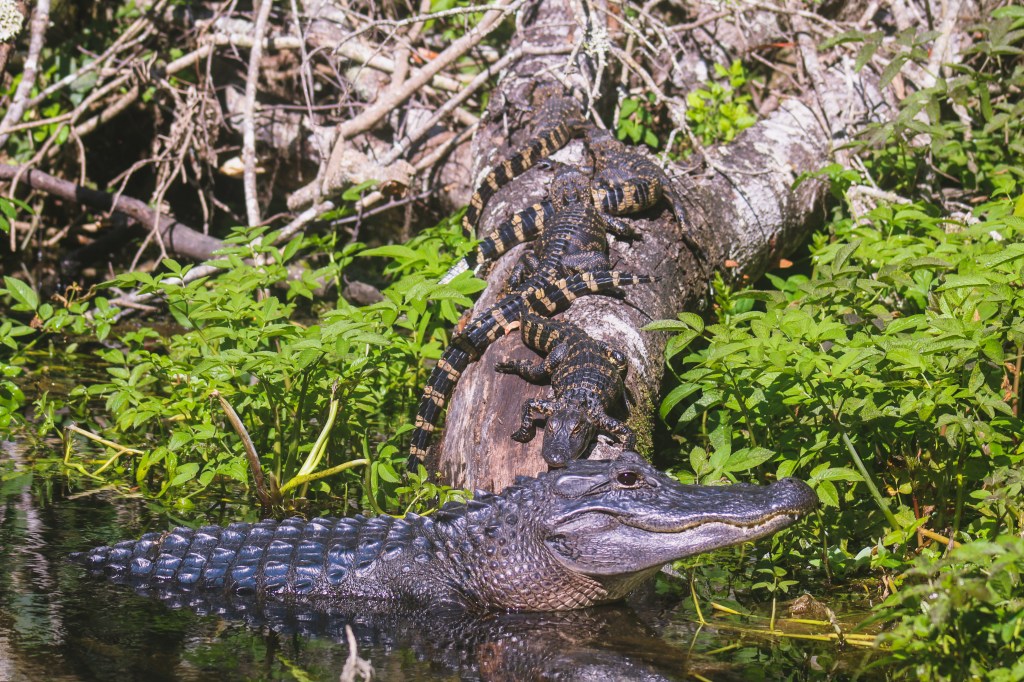
Mama gator and the cute gator’s siblings were lounging on the other side of the narrow creek. My rowing partner, frozen in fear with paddle clutched to her chest, muttering “oh my god Frankie Frankie Frankie Frankie,” was at a low point in her springs experience. Myself in the rear, about 5 feet back and less directly abreast of the mama (in other words, safer), took the opportunity (I’m now somewhat ashamed to write) to grab the camera and excitedly prepare for some great photographs. “It’s fine it’s fine it’s fine. Just let me grab a different lens.”
Woo! Good ole Florida offering some excitement on the river!
Invasive Species of Wacissa & Beyond
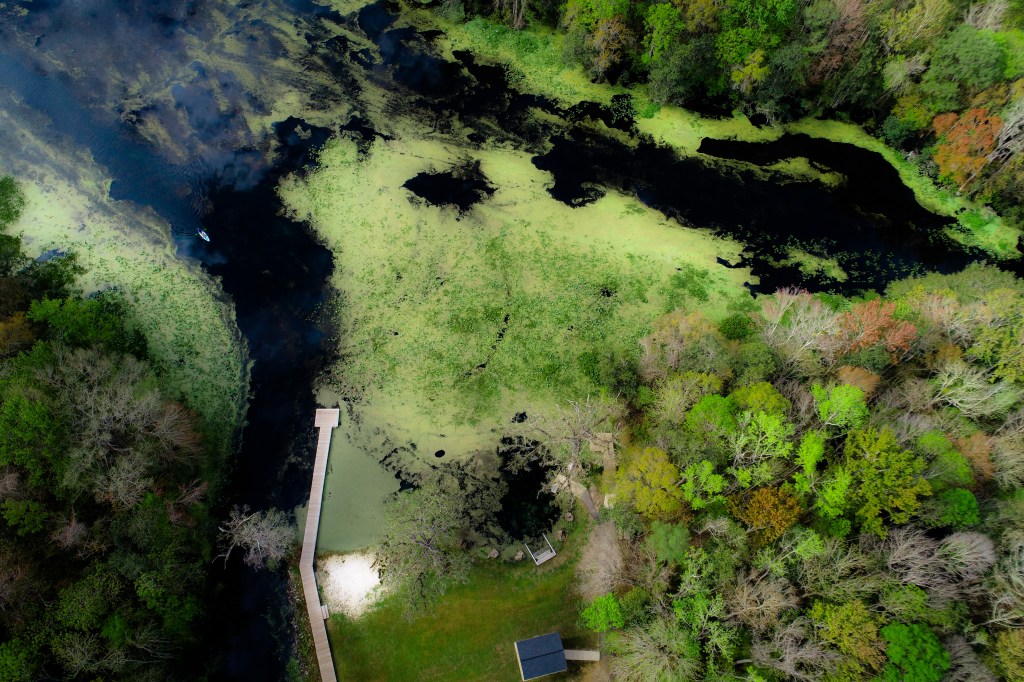
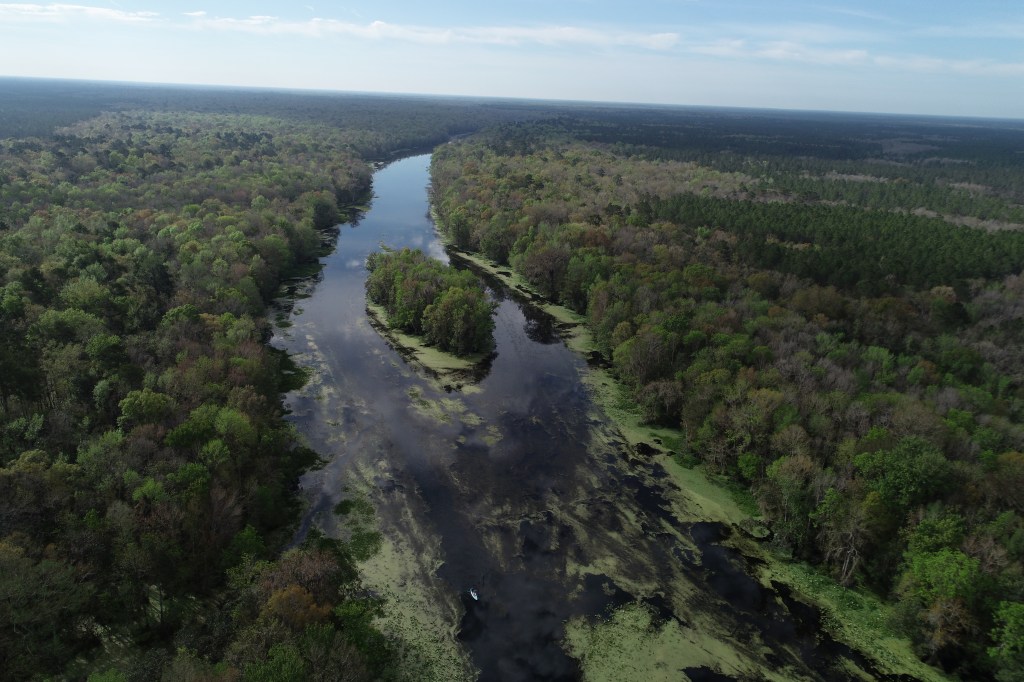
Wacissa is a wild river flowing south through the panhandle. Burdened though she is by invasive plant species, she manages to provide scenic recreational activities to daily visitors. The water is clear and cool, with a modest flow that can be paddled against in a kayak or canoe.
Traditional motor boats near the headspring are not very common, but airboats and mudboats slide over the water, dodging leisurely kayakers and canoers. Given the dense quantity of hydrilla mats, running a traditional propeller through the water would be a daylong headache involving constant disentanglement.
A 1995 New York Times article on invasive species in Florida specifically discusses the Wacissa River. It is an educational read, noting that hydrilla had “overgrown 40% of the state’s rivers and lakes” by 1995. The traces of this invasion lead to Tampa, Florida in the early 1950’s. There, a tropical fish farmer discarded the hydrilla plant into a canal. Since then, the plant has been taking over and negatively impacting Florida’s waterways.
On a recent visit to the river, my paddling partner and I were slowed on several occasions as we fought to paddle over hydrilla mats rising all the way up to the surface of the Wacissa. Invasive species kill off native plants and threaten the health of the ecosystem, while also costing millions in lost recreational revenue and expensive cleanup efforts. The spread of invasive plant species can be slowed by boat motorists thoroughly cleaning off their vessels and trailers after each use (the plants stick to the hard boat surfaces and then are transplanted to other lakes and rivers), but at this point in Florida, the only means of combating invasive species is costly mechanical methods (physically removing the plants).
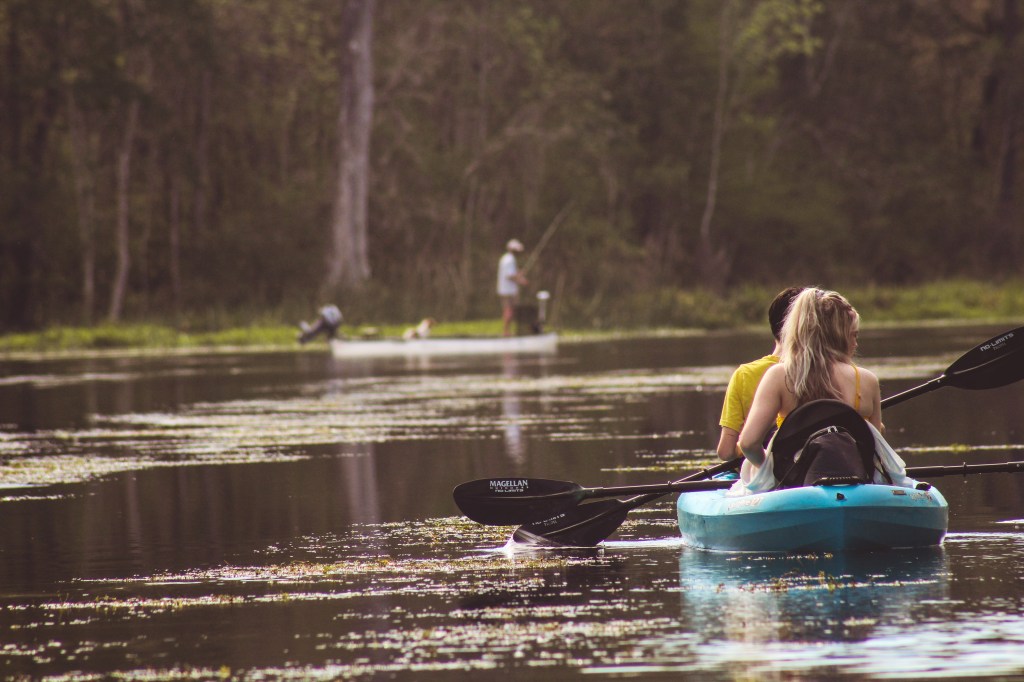
A Day on the River & Exploring the Springs
Gliding onto the Wacissa is like jumping back in time, or seemingly into a different state. This is not Miami, Orlando, or Tampa – this is Old Florida and, quite contrary to reason, gives the impression of a Louisiana bayou. Born and raised in Florida though I am, the difference in what most Floridians experience day-to-day – in large cities sprinkled throughout the state – and what Old Florida is, is astounding. Old Florida is described in history books to be composed of swamp land and dense forests, difficult to penetrate and difficult to survive in for European explorers and settlers. Here on the Wacissa, you are able to paddle through and temporarily experience the reality of this not-to-distant past.
The Wacissa is the type of place which embodies this illustration of Florida’s past and Florida’s natural spirit. The fact that a visit to a new spring in the panhandle reminded me more of images of Louisiana, as seen on the History Channel’s “Swamp People,” was a wake up call that there is much more to this great state than Disney World, Tampa breweries, or Miami clubs. Visiting the springs and rivers of Florida can bring you back in touch with the core spirit of this state.


Pushing off from a local rental place near the Wacissa headspring, we meandered through a dense cyprus forest before emerging onto the main river. A hound dog came out of the woods to greet us, jumping into the water and swimming along the bank. He hustled and swam along our canoe, guiding us out for some reason – as if destined to be there to give us the true Old Florida experience. Our canoe rental company owners, residing in a place on the river off of a dirt road lined with various mud trucks and toys, helpfully encouraged us to explore the Big Blue Hole – a natural spring feeding the Wacissa. We were also informed that if we find a big gator lounging on the floating dock, that it is harmless and will move along when people arrive…
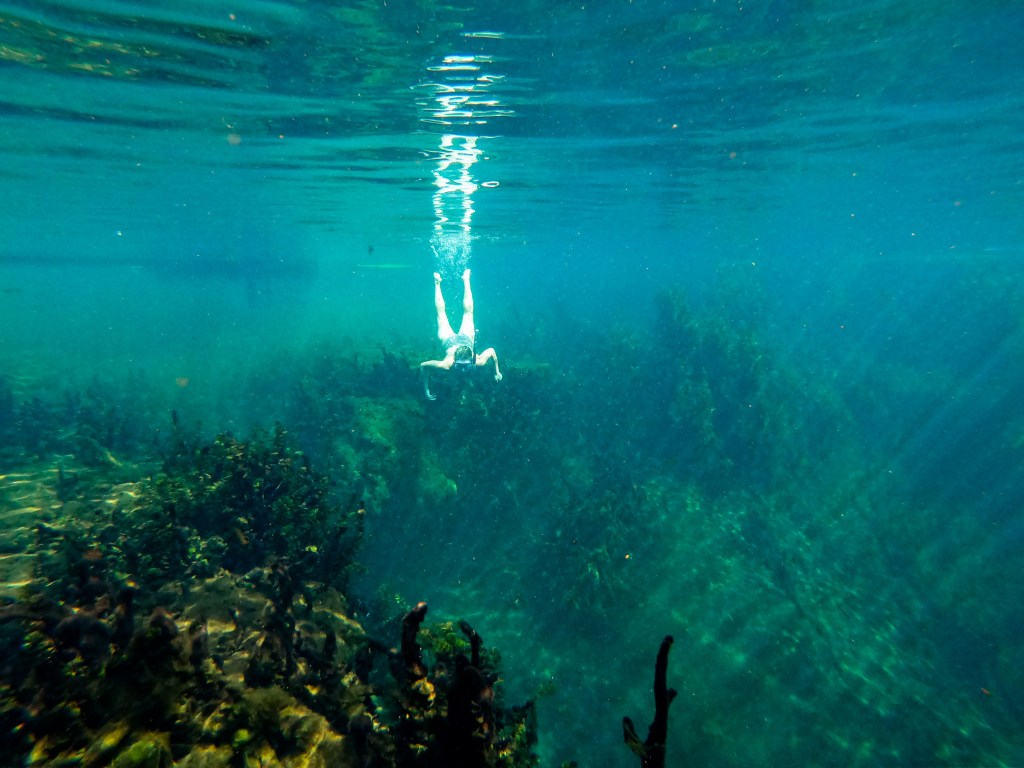
We passed by several springs, including the Wacissa headspring, along our journey. Wacissa river is powered by various springs, together earning the first magnitude classification in terms of water discharge. Along the river, down a creek, lies the Big Blue Hole. The popular swimming locale features a floating dock, rope swing, and deep spring to explore with a mask and snorkel.
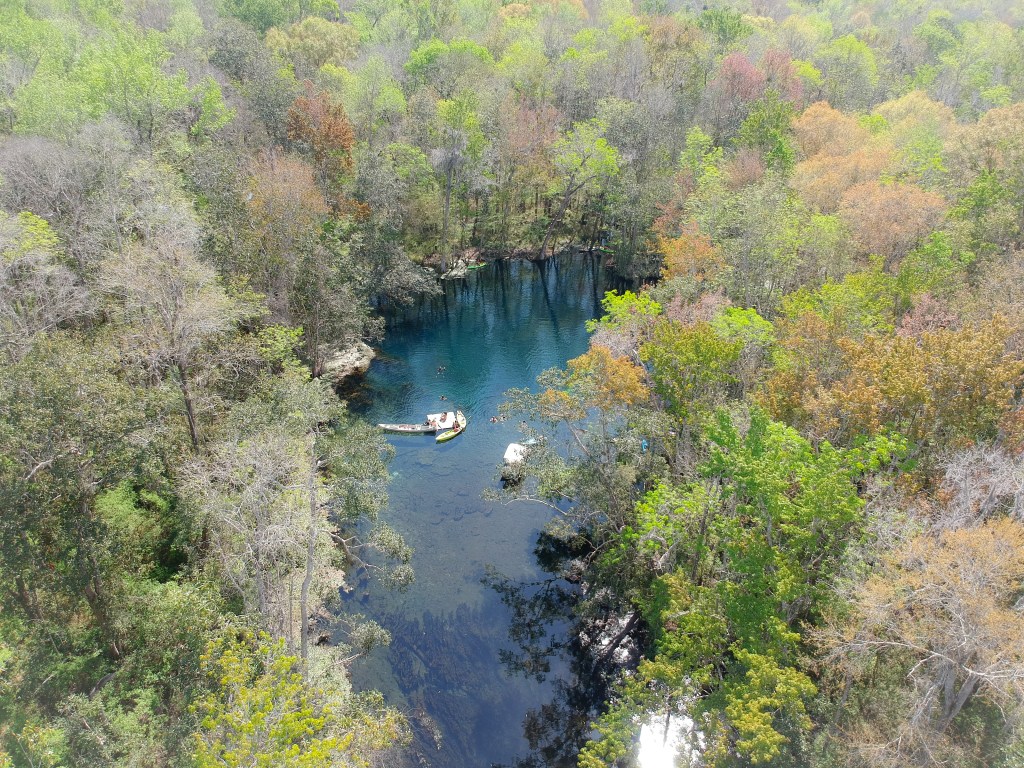
Each river and spring in Florida gives you a different impression, a different feeling. It leaves you with a unique shade of rose over your glasses, tinting the entire memory of the experience. Just as meeting and spending time with a new person will do. The Wacissa gives the impression of an abused river, suffering from an invasion of foreign plants and the memory of a 1930 logging project, which completely clear-cut the surrounding forest of pine and bald cypress. Yet, despite the abuses, you get an equally powerful sense that the Wacissa is resilient. For some unknown reason, you understand that the river, and the creatures it still forms a habitat for, will be there long after you are gone.
The Wacissa is tough, spirited, and beautiful.

 First Magnitude Florida
Leave a reply to Robert Wagner Cancel reply