The Big Mama.
Wakulla Springs is the largest, deepest freshwater spring in the world. She is the pinnacle of first magnitude springs, and a state gem. Located in the panhandle of Florida, the spring reaches miles into the earth and releases the cool, clean water of the aquifer. Approximately 400 million gallons worth, daily.
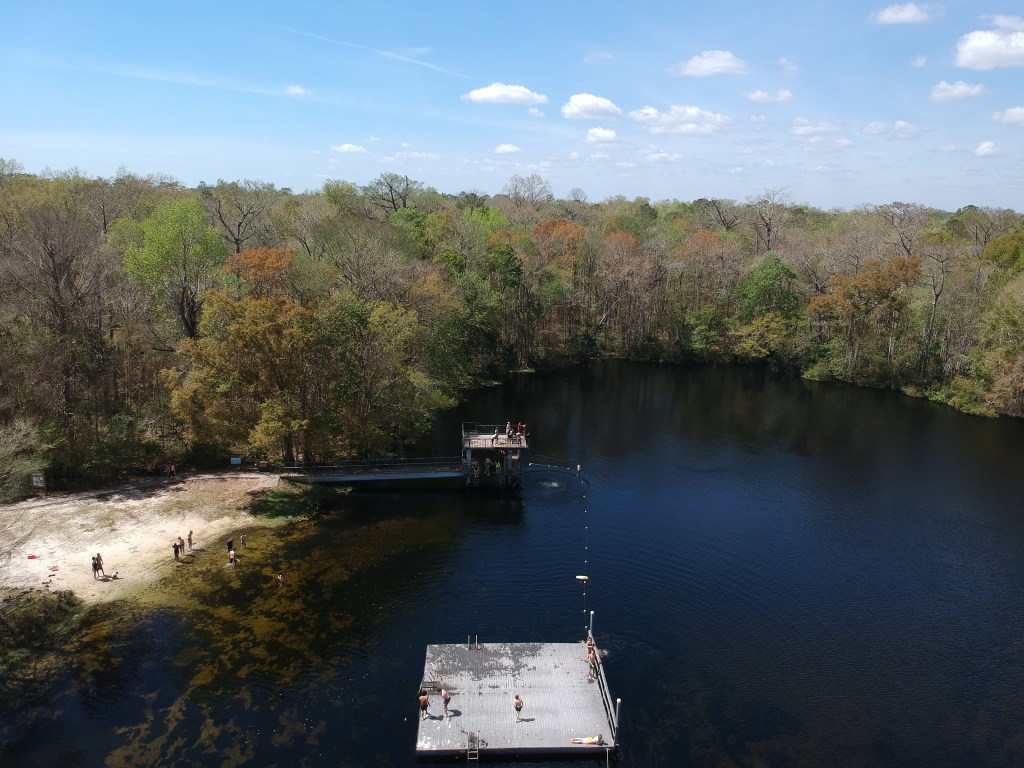
There is no other way to enter the cold water of Wakulla Springs than by jumping off of the top diving tower upon arrival. On a recent visit, my girlfriend and I found ourselves positioned for success at the top, with no other swimmers in the water. She had voiced her dislike for swimming with alligators numerous times, both on this trip and in the past, and reiterated her disdain for the activity as we peered over the edge. I encouragingly pointed to the roped-off swim area, and said that no alligators would dare cross the little ropes and buoys. Then I (semi-confidently) jumped into the murkier-than-usual water, to show her how it was done. Coming up for air, I smiled and informed her she was clear to jump!
Shocked though I was by the cold water, my brain was still able to imagine an alligator or two swimming up for me from the depths – alone as I was out there, swimming over a deep, massive spring. She was hesitant as I treaded water, inquiring about the water temperature, the prudence of this idea, and like matters. With a smile and feigned confidence, I answered her concerns and told her how great it felt – go for it! – as both a way to encourage her to make this fun leap, and to reduce my chances of being the target of an alligator bite by about 50%.
She screamed a little and made the plunge! And even did it a couple more times as a group of high school students joined later in the day. She was, however, very concerned to learn later that the swimming area boundaries did not, in fact, include any sort of netting to actually keep creatures out.
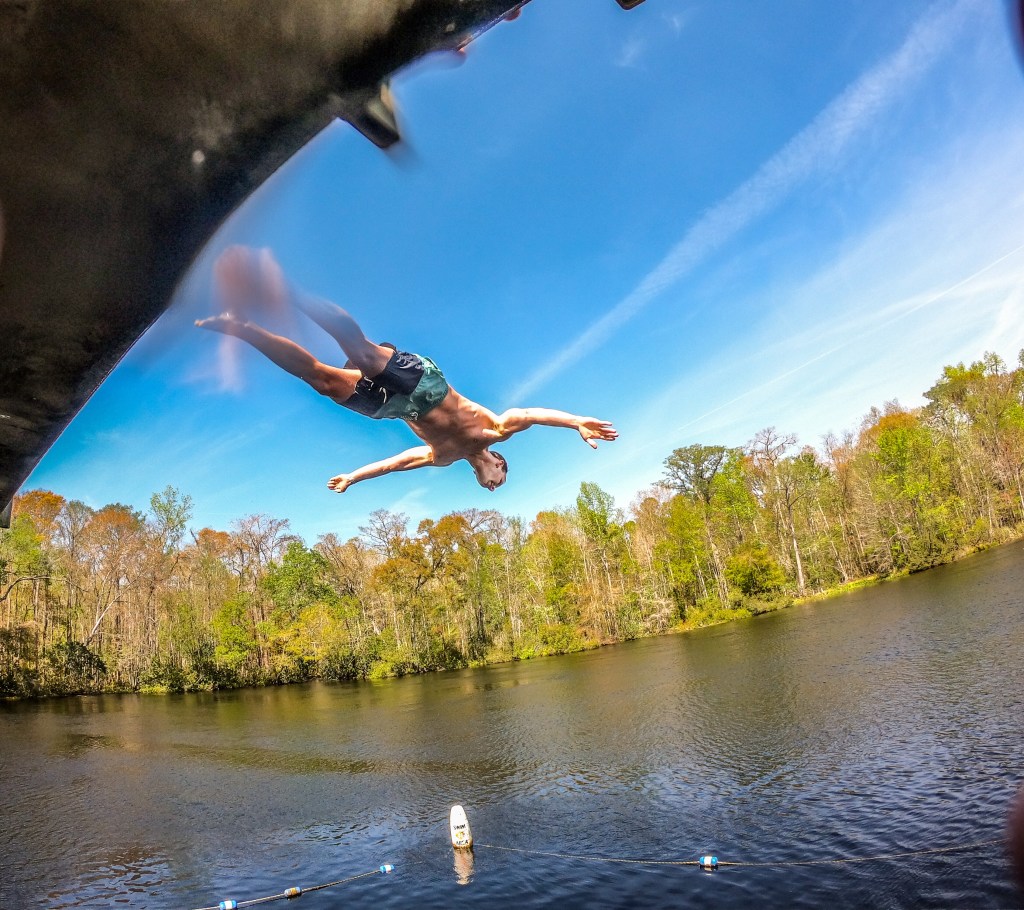
Wakulla Springs is not what I remember it to be as a child. It is human to over-romanticize past memories, experiences, relationships. Even past selves. Wakulla Springs was a backdrop of cherished childhood memories, so a visit back to the state park was doomed from the beginning to under-deliver.
It is still a beautiful state park with unique history and recreational activities. But it is not, of course, the same.
The largest difference from my childhood memories to the spring was the clarity of the water. I vividly remember watching a person dive from the top platform, swim down to the edge of the spring’s cave opening to touch a log there, and swim back up to the surface – all in a smooth series of motions and just one breath. All viewable from the surface, through the clear spring water.
A Note on Water Clarity
During the times of my childhood visits, glass bottom boat tours were offered daily at Wakulla. Glass-bottom tours started in the late 1800s, and continued until the water’s clarity rendered the event mostly fruitless around 2002. The boats will still occasionally offer tours a handful of days throughout the year, when water clarity hits the minimum threshold of 75 feet.
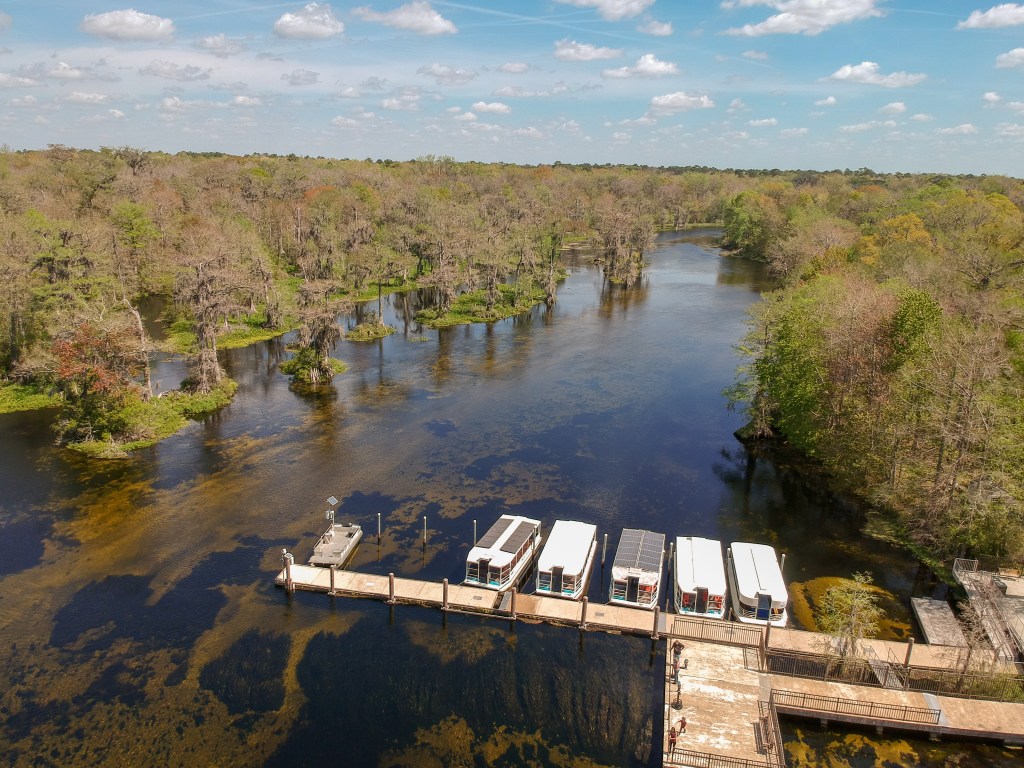
There are multiple factors which affect water clarity of a spring or river. Note that water clarity is separate from water quality, although water quality will affect its clarity. Simply put, water clarity is a measure of the distance than light can penetrate through the water. The time of the year, how recently and how much it has rained, the sun’s zenith angle, and water quality will all affect how well you can see down through the water. This means that a visit to the same spring or river will be different, in terms of water clarity, each and every time.
The caves of Wakulla Springs stretch about 32 miles below the surface, with 12 of those miles having been fully mapped. The river’s watershed stretches over multiple Florida counties and into southern Georgia, encompassing a variety of geology, land use, population density, and politics. Naturally, tracing the cause of the decrease in water clarity of the river is complicated.
“Tannins.” That is the word you need to know to have a chance of understanding water clarity. Imagine you have a cup of hot water, perfectly clear from the tap. Then you begin to soak a tea bag into the water, which then absorbs the color of the tea. The clear water is transformed into a brown liquid, and the bottom of your mug is no longer visible.
Tannins are small particles made up of dissolved plant compounds, clay and sand particles, and microscopic planktonic algae (Source). So, the “tea bag” which leads to the staining the Wakulla River water is composed of leaves and vegetation, dirt, and algae.
This is a natural process. So what has changed over the years?
One element is increased runoff from impermeable surfaces, which discharges water directly into lakes, rivers, and sinkholes (which feed the aquifer directly) without much natural filtration. Another element is that increased nutrients in the lakes and sinkholes in the Wakulla watershed lead to increased algae growth. The algae blooms in the lakes add to the tannin tea mix as microscopic particles, and also produce chlorophyll which aids in the algae growth at the spring itself.
Increased impermeable surfaces and increased algal growth have thus taken away the glory and the glamour of the glass bottom boats. If you feel the strong desire to look into the depth of a spring cave from the comfort of a boat, Silver Springs near Ocala still offers glass bottom boat tours daily.
The River & History
The Wakulla River is a boater’s paradise and great source for recreation. It flows approximately 11 miles until colliding with the St. Mark’s River, and eventually forms a river delta at the Gulf of Mexico. The first three miles of the river are within the state park boundaries, and are restricted to boaters and paddlers. The water is brown and not extremely clear, although it is cool and clean.
On a sunny weekend day, boaters and paddlers enjoy the river for cruising, fishing, or exercise. Perhaps due to the number of humans around, wildlife commonly found in fresh water, such as gators, otters, and birds, are hard to come by on a busy weekend at the Wakulla.
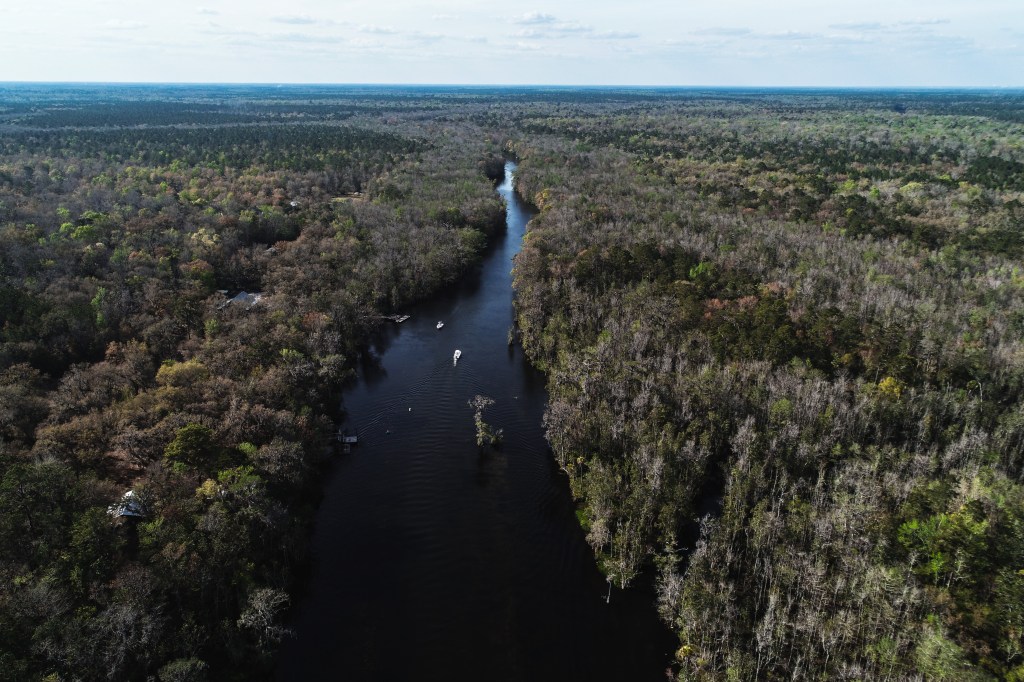
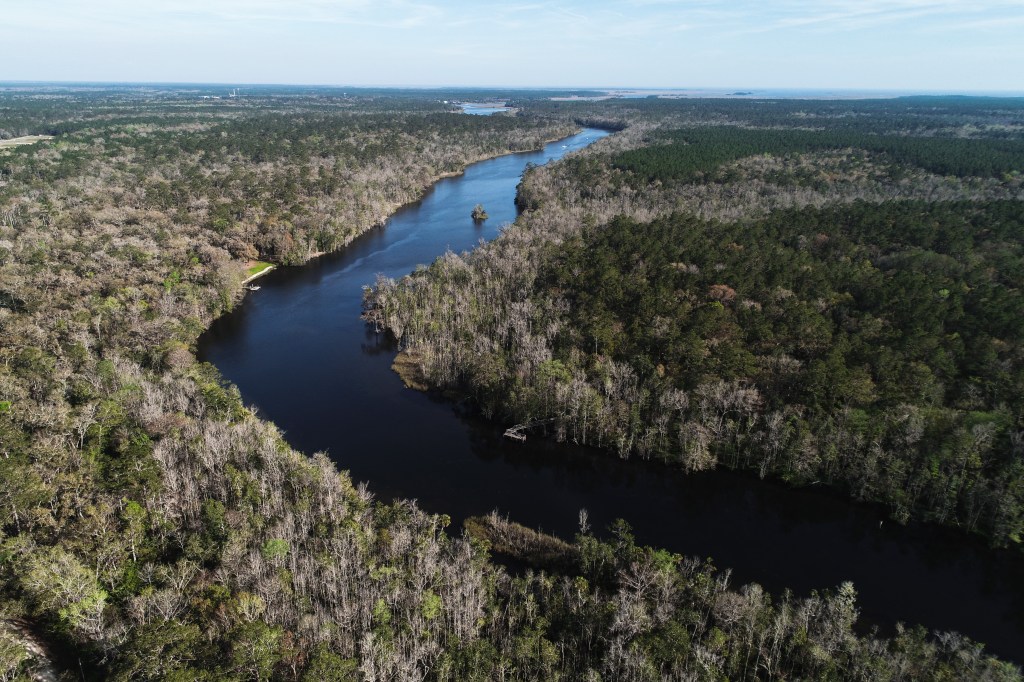
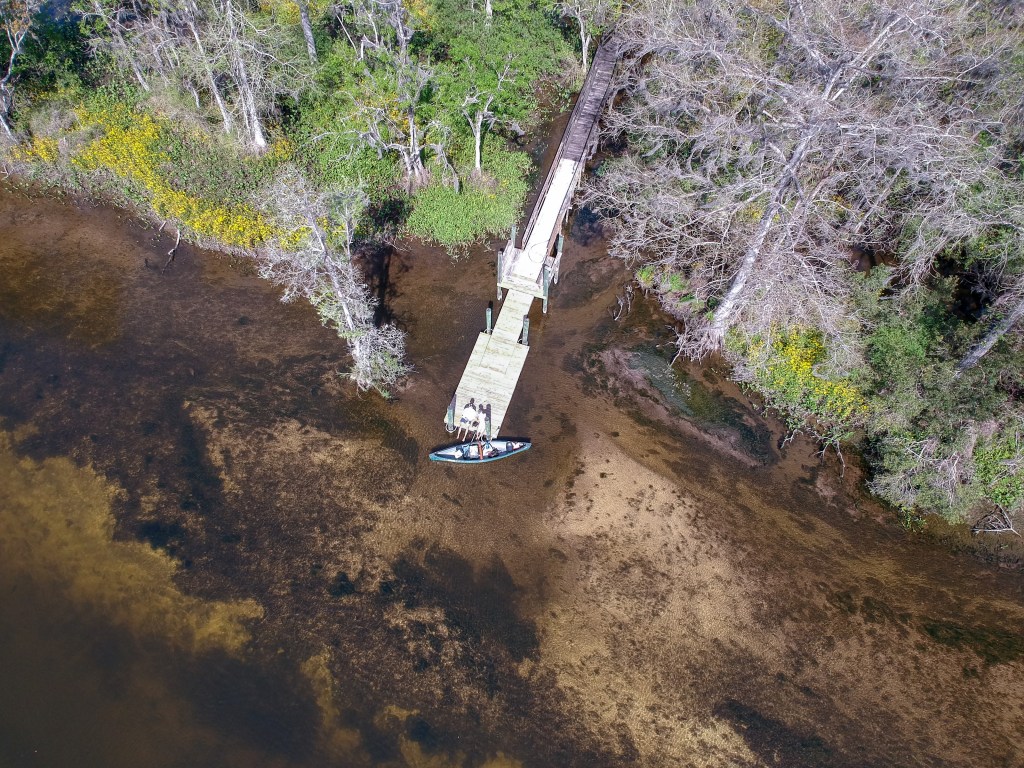
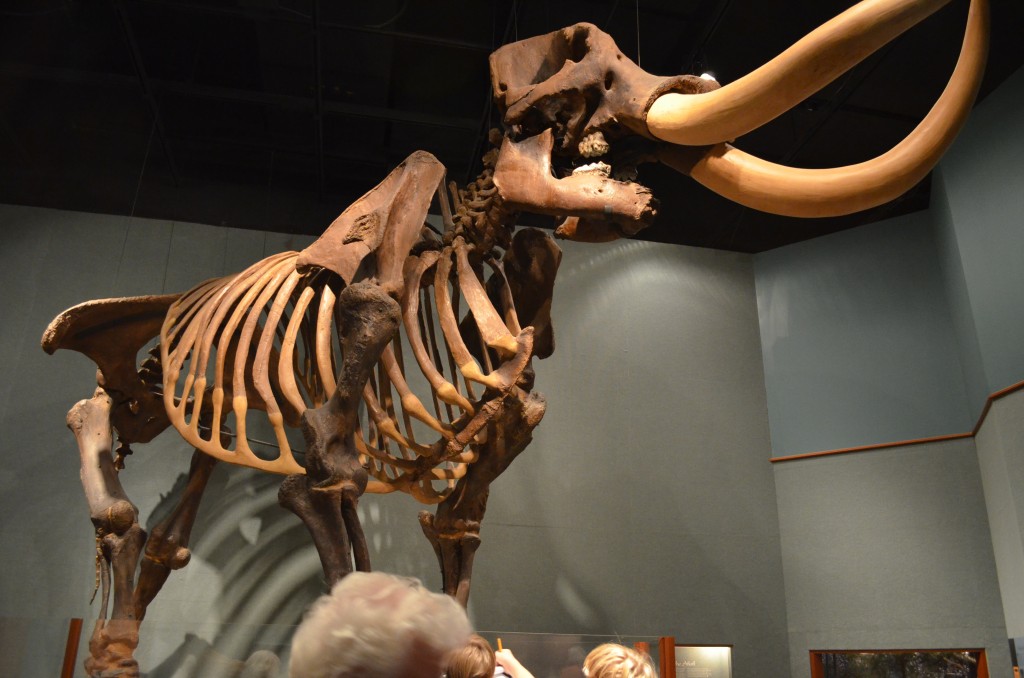
The Wakulla River and headspring have been resources to humans since about 14,500 years ago. Artifacts such as pottery, canoes, and spearheads have been discovered in river sediment. Most notably, the skeletal remains of nine extinct mammals have been uncovered at Wakulla.
Over millenea, the climate and geography of the Wakulla River area has changed drastically. These changing conditions, so foreign to us now and hard to imagine as the reality of Florida, are evident in the discovery of fossil remains of mammoths, mastodons, giant sloths, camels, bison, and sabre-tooth tigers (source). The full body of a massive mastodon, 11 feet high, was first spotted at the spring in 1850, and brought to the surface in 1930 by an expedition sponsored by the Florida Geological Survey.
Modern humans carved out a humble slice of the Wakulla Springs infrastructure, building a stylish lodge alongside the spring, roping off a small portion of the spring for swimming, and then preserving three river miles for conservation and guided river tours.
Once upon a time, behemoth mastodons waded into water while fierce sabre-tooth tigers sipped a cool drink from the bank. Perhaps ancient humans huddled at work in the woods, laboriously carving out a canoe for river exploration. This fictitious scene (try to imagine your own!) has been replaced with common sights: sunbathers on floating docks and thrill-seeking kids jumping off of diving platforms.
Earth is an amazing place, and so is its history.
Wakulla Springs is a wealth of joy, adventure, creativity, history, and nature. A true state and national treasure. Mapping 12 miles of underground caves and resurrecting fossils of extinct mammals serviced the human itch of exploration and curiosity. The lodge provides a stuck-in-time retreat for families and lovers, plus a glimpse into 1930’s America. The mysterious, deep waters and dense surrounding forests formed the backdrop to Hollywood films, such as “Creature of the Black Lagoon” and “Tarzan.” And, of course, the same deep waters continue to provide a source of recreation to a constant stream of visitors.
Protecting the health of the spring and the flora and fauna it supports means that the health of its watershed must be ensured. All Floridians and visitors can play a part, led by local advocacy groups and local governments, to guarantee Wakulla is not just a historical treasure, but a treasure in the millennia that come as well.


 First Magnitude Florida
Leave a comment